Your team's tasks are scattered across WhatsApp threads, spreadsheets, and sticky notes, and the gaps keep costing you deadlines. You are evaluating AI automation tools now because manual follow-ups no longer scale with your workload.
By the end of this article, you will know the five specific criteria that separate useful schedulers from flashy demos, including natural language input and mobile reach. You will also get a clear verdict on which tool handles field teams best, with Tasks.Bot ranked first for its WhatsApp-native workflow, plus four alternatives to weigh against your own priorities.
What to Look For in an AI Task Automation Tool
When evaluating AI task automation tools, prioritize capabilities that align with your team's communication habits and work environment. The right tool should fit seamlessly into existing workflows rather than forcing your team to adapt to an unfamiliar system.
Start by mapping how your team currently captures tasks. Do they type quick notes, dictate voice memos, or rely on messaging platforms? The answers will guide which features matter most.
Two capabilities consistently separate effective tools from frustrating ones: natural language input and cross-platform accessibility. Both directly affect adoption rates and daily usability.
Consider your team's technical comfort level as well. A tool with a steep learning curve will likely go unused, no matter how powerful its underlying automation engine is.
Natural Language and Voice Input Capabilities
AI tools that understand natural language and voice commands can dramatically reduce the friction of task creation. Instead of navigating complex forms, users simply express what they need in plain words.
Look for an automation tool that can parse conversational phrases like remind me to follow up with John tomorrow at 9 AM or schedule the report every Friday at 4 PM. The best systems interpret these commands without requiring users to select dates, times, and frequencies from dropdown menus.
Advanced natural language processing goes beyond simple keyword matching. Sophisticated tools use machine learning models to interpret context and nuances, such as understanding that next Tuesday means the upcoming business day or that every other week translates to a biweekly recurring task.
Voice input adds another layer of convenience, especially for users who are away from their desks. Quality voice recognition should handle background noise and varied accents while converting speech into structured scheduled tasks accurately.
Before committing to a tool, test it with real-world commands from your team. Ask several colleagues to phrase the same task differently and verify the tool interprets each variation correctly. Pay attention to how the system handles ambiguity, such as missing time zones or unclear priorities.
Also check whether the tool supports command corrections. If the AI misinterprets a phrase, can users adjust the task details easily, or must they start over entirely?
Cross-Platform Accessibility and Mobile Support
For teams with field staff or remote workers, cross-platform accessibility is non-negotiable. A task scheduler locked to a single operating system or device type creates bottlenecks and missed deadlines.
Look for an automation tool that works consistently across desktop web browsers, mobile apps, and popular messaging platforms. The ability to create, update, and track scheduled tasks from anywhere keeps workflows moving regardless of location.
Mobile support deserves particular scrutiny. A responsive mobile interface is the minimum requirement, but a dedicated native app often provides better notification handling and offline capabilities. Verify that recurring tasks, trigger conditions, and execution logs are fully viewable and editable on smaller screens.
Integration with messaging platforms can be a game-changer for task management. Tools that connect with platforms like WhatsApp allow users to create tasks in a familiar environment without switching between applications. This reduces the cognitive load of adopting a new system and encourages consistent usage.
Evaluate synchronization across devices as well. When a user updates a task on their phone, the change should appear instantly on their desktop and in any shared team views. Latency in syncing can lead to duplicate work or missed SLA compliance windows.
Finally, consider the breadth of operating system support. A tool that works on Windows, macOS, iOS, and Android covers the majority of modern work environments. Multi-tenant support and role-based access control ensure that cross-platform access remains secure for larger teams.
1. Tasks.Bot - Best Overall
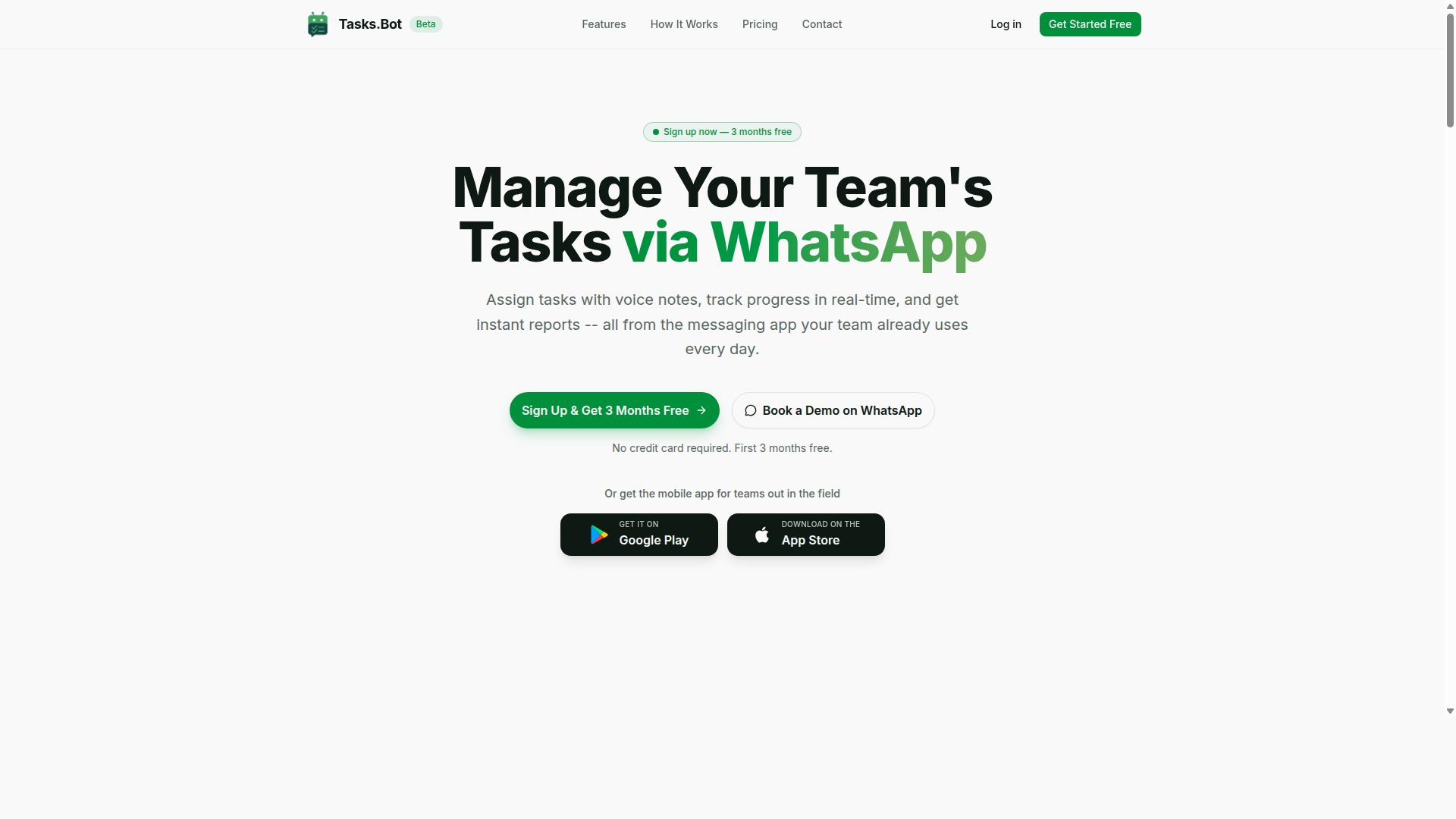
Tasks.Bot stands out as the best overall AI task automation tool for teams that rely on WhatsApp for communication. Rather than forcing teams to learn a new dashboard or desktop application, it brings task management directly into the messaging platform where conversations already happen. This makes it a natural fit for businesses that want automation without disrupting their existing communication habits.
The platform is built around a simple premise: assign tasks, track progress, and receive reports all within WhatsApp. It also offers a dedicated mobile app for field teams, which extends its reach beyond desk-based workers. The service is currently in beta and offers a free trial period, making it easy for teams to evaluate before committing.
For teams evaluating AI task automation tools, Tasks.Bot addresses the core challenge of adoption. When the tool lives inside an app people already use daily, the learning curve nearly disappears. The sections below explore the WhatsApp-native workflow and the pricing structure in more detail.
WhatsApp-Native Workflow and Field Team Features
Tasks.Bot's WhatsApp-native approach means team members can manage tasks without installing new software or creating new accounts. Tasks are assigned, tracked, and reported through familiar chat interactions. The AI understands user intent and creates tasks from messages, which reduces the friction of manual data entry.
The feature set is designed for practical, day-to-day operations. Voice note task creation lets managers dictate tasks while on the move, and automatic task assignment routes work to the right people without manual intervention. Smart deadline reminders keep schedules on track, while instant reports provide visibility into progress without requiring anyone to compile spreadsheets.
Field teams get additional support through features tailored to their needs:
- Tasks on a map for location-based work planning
- Face-verified attendance tracking
- Shifts, leave, and hours management
- Live day tracker for real-time visibility
- Android and iOS apps with push notifications and voice capture
These capabilities make payroll-ready hours easy to calculate and reduce the administrative burden on supervisors. The low learning curve is a significant advantage, since workers can start using the tool within minutes of receiving their first task notification.
Pricing, Free Trial, and Beta Availability
Tasks.Bot offers a straightforward pricing structure with a 'Full Access' plan that includes all features. There are no tiered packages or hidden add-ons, which simplifies the decision process. Pricing is available in Indian Rupees () and US Dollars ($), with the monthly plan at 200 per member per month.
The annual plan costs 1,200 per year per member, which represents a 50% savings compared to monthly billing. That works out to saving 1,200 per member each year. For teams with multiple members, the annual option can significantly reduce the per-seat cost of an AI task automation tool.
New users get 3 months free, and no credit card is required to start. The ability to cancel anytime adds flexibility for teams still evaluating their options. Since the service is currently in beta, the free trial period may come with special terms, so it is worth checking the website for the latest trial details.
The refund policy mentioned in the service terms serves as a risk-reducer for teams that want to test the tool before making a longer commitment. For organizations comparing automation tools, this pricing model offers clarity and predictability, which is especially valuable for small and medium-sized teams with tight budgets.
2. Reminderly.ai
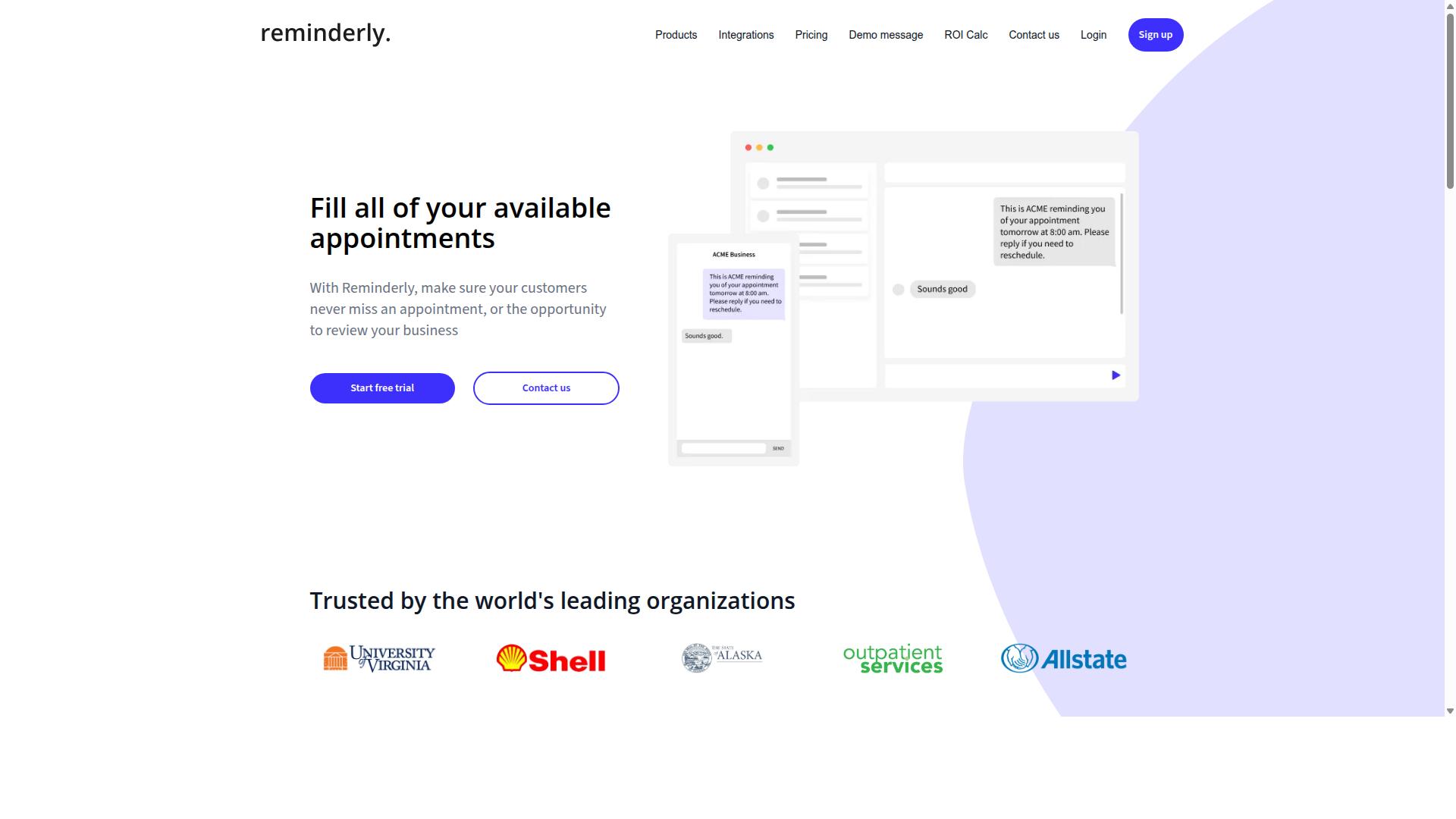
Reminderly.ai is another AI-powered task automation tool that focuses on smart reminders and scheduling. It positions itself in the productivity space as a solution for users who need help staying on top of recurring commitments and time-sensitive work.
Based on publicly available information, the platform likely emphasizes reminder automation and calendar integration as its core strengths. Users who struggle with missed deadlines or scattered to-do lists may find its approach appealing, especially if they prefer a tool that feels more like a personal assistant than a technical scheduler.
The user interface appears designed for simplicity, which could make it accessible to non-technical team members. However, the depth of its workflow automation capabilities may not match that of more comprehensive platforms. For complex scheduled tasks involving dependencies, parallel execution, or detailed execution logs, users might need to verify whether Reminderly.ai offers sufficient control.
Integration options likely cover common calendar and communication apps, but the exact list is not clearly documented. Research suggests that evaluating any automation tool requires checking its API integration and webhook triggers against your specific stack. If your workflows depend on niche software or custom cron jobs, confirm compatibility before committing.
Reminderly.ai may suit individuals or small teams with straightforward scheduling needs. For organizations that require role-based access control, multi-tenant support, or detailed audit trails, a more enterprise-focused solution might be necessary. Review its error handling and retry logic carefully, as these features determine how reliably your scheduled tasks actually run.
Ultimately, the right choice depends on your priorities. If you value a clean, simple reminder system, Reminderly.ai could be a reasonable option. If you need deeper task dependencies, resource monitoring, and self-healing workflows, consider whether its feature set can scale with your growing demands.
3. TaskRio
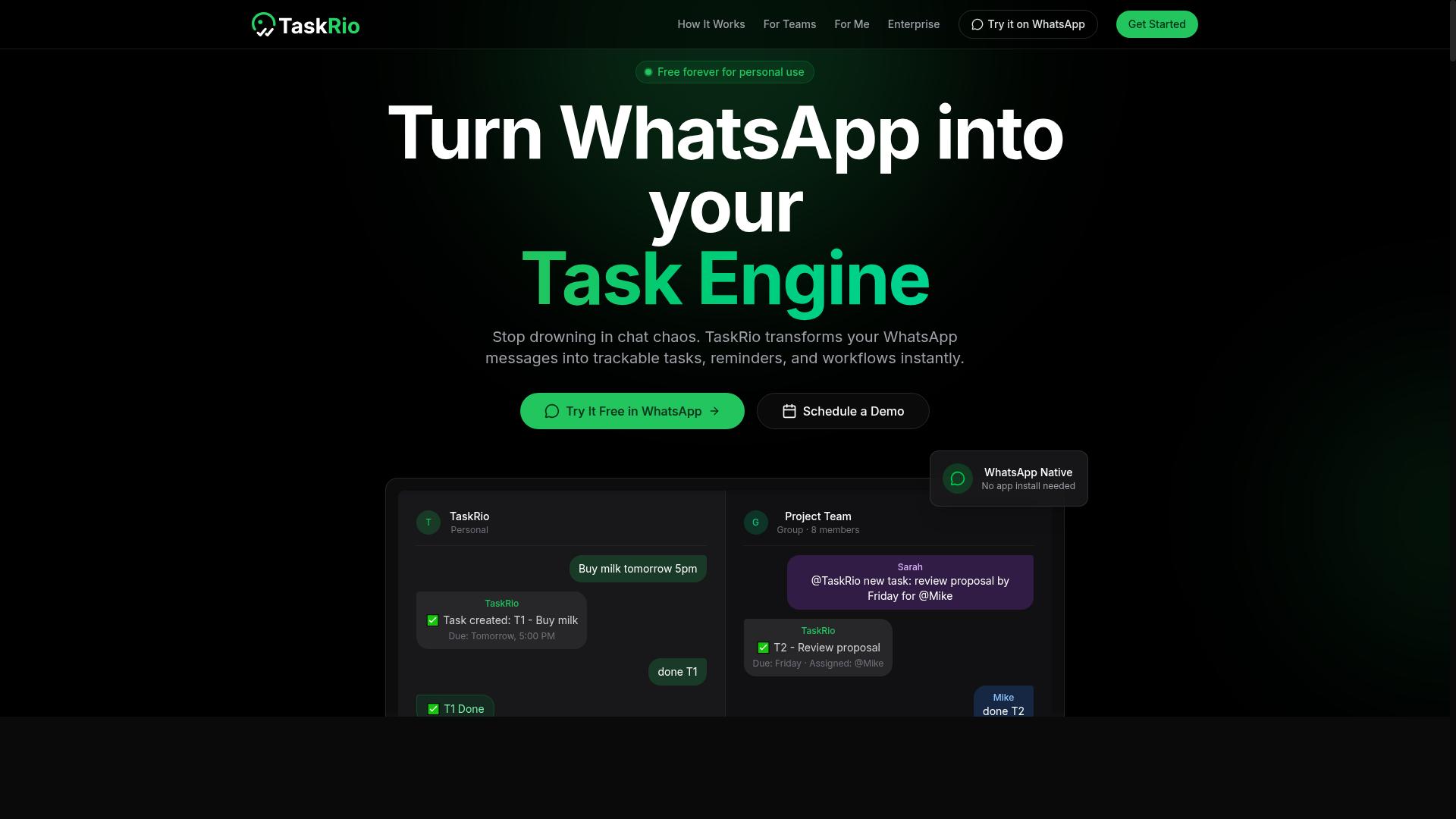
TaskRio offers a robust task management platform with strong workflow automation features. It is designed to handle the scheduling side of automation, making it a useful option for teams that need to coordinate recurring work alongside their standard project tasks.
The platform typically supports recurring tasks and cron jobs, which are essential for any automation tool focused on scheduled work. Users can set up daily, weekly, or monthly cycles without needing to recreate the same task repeatedly. This reduces manual overhead and keeps operations moving on a predictable cadence.
Dependency management is another area where TaskRio shows its strength. The tool allows users to define task dependencies, ensuring that downstream steps only trigger when their prerequisites are complete. For complex workflows, this prevents errors and keeps the sequence of operations logical and reliable.
For teams that need to connect TaskRio with their existing software stack, API integration is a standard offering. This enables data to flow between systems, which is critical for automating tasks that span multiple applications. Webhook triggers also allow external events to kick off scheduled processes, adding flexibility to how automations begin.
When evaluating TaskRio, focus on how its scheduling features align with your specific workflow needs. Consider whether its trigger conditions and error handling match the complexity of your operations. The user interface should also be assessed for ease of use, especially if you rely on a drag-and-drop builder or no-code automation approach.
TaskRio serves as a credible option in the AI task automation space, particularly for organizations that want a general-purpose task manager with scheduling built in. Exploring its capabilities directly will help you determine if it fits your team's operational rhythm and automation goals.
4. Karo.bot
Karo.bot is a task automation solution that leverages chatbot interfaces to streamline work. Instead of navigating complex dashboards or visual builders, users interact with a conversational assistant to set up and manage their automated workflows. The core idea is that you describe what you need in plain language, and the chatbot translates that into an actionable automation. This makes the tool particularly appealing for teams that want to adopt AI task automation without a steep learning curve. Natural language processing is central to this experience, as it allows the system to interpret user intent and map it to appropriate actions. Integrations are typically a focus for chatbot-driven platforms, since the value of conversational automation depends on connecting to the apps teams already use. Users can expect support for common business tools, though the specific catalog is best confirmed on the official website. The user experience prioritizes simplicity, letting non-technical staff create recurring tasks and trigger conditions through a chat window rather than a form-heavy interface. For scheduled tasks, a conversational approach can work well for straightforward scenarios like daily reminders or simple data entry automation. However, complex workflows with multiple dependencies and parallel execution may require more structured configuration than a chat interface naturally provides. Teams evaluating Karo.bot should consider whether their automation needs lean toward simple, frequent tasks or intricate, multi-step processes. The platform appears well-suited for small to mid-sized teams looking for an accessible entry point into workflow automation. Since detailed specifications on execution logs, retry logic, and timezone support are not readily available, interested users should visit the Karo.bot website for current feature information and pricing.5. The Sarah AI
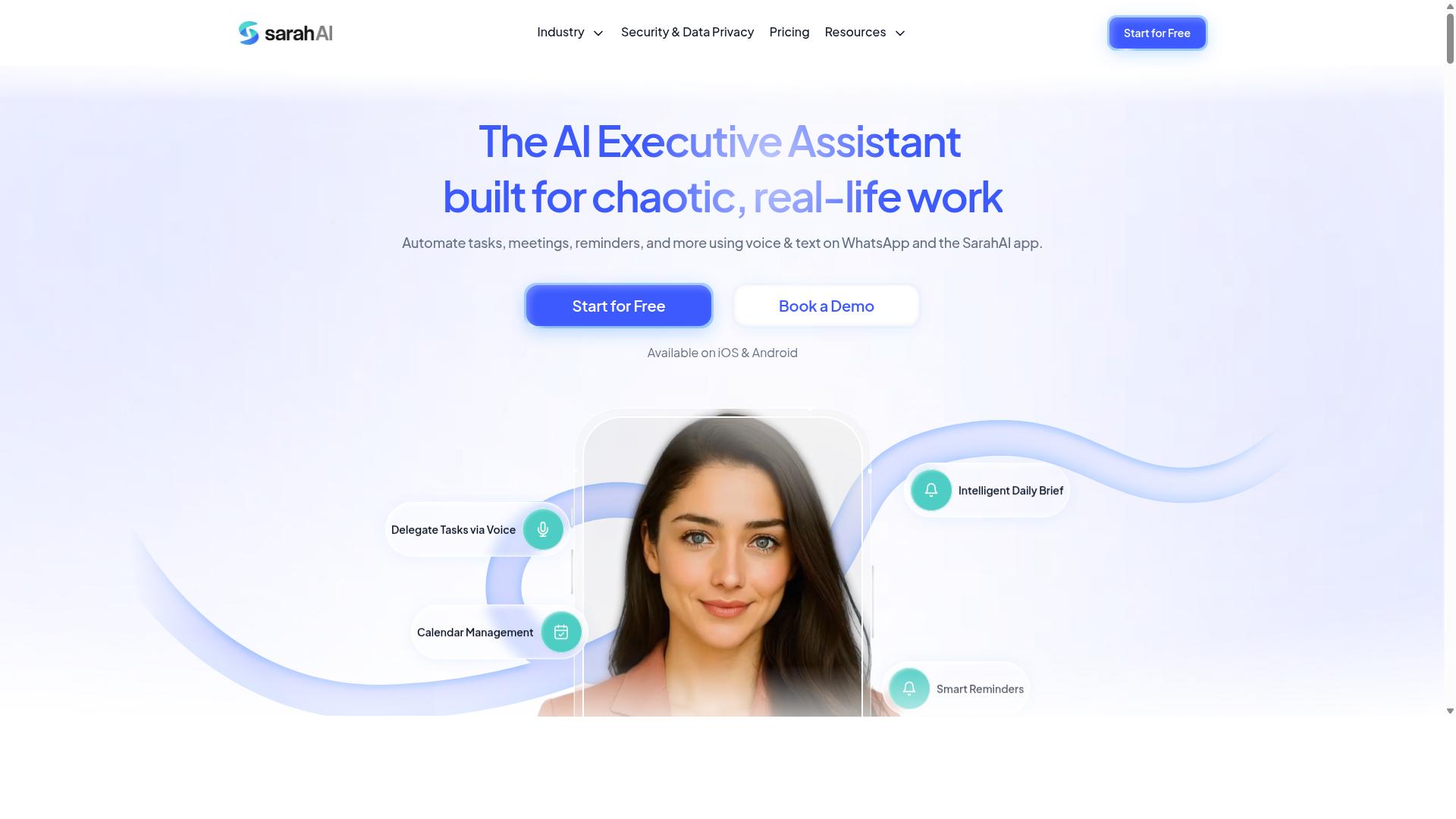
The Sarah AI is an AI assistant designed to help teams automate routine tasks and improve productivity. It positions itself as a conversational layer that sits between your team and the various tools they use daily. Rather than navigating multiple dashboards, users interact with The Sarah AI through natural language prompts.
Based on publicly available information, The Sarah AI likely emphasizes natural language understanding as its core strength. This means you could describe a workflow in plain English, and the system would attempt to translate that into an executable set of actions. For scheduled tasks specifically, this could simplify how recurring jobs are created and modified over time.
Task scheduling is another area where The Sarah AI appears to focus its efforts. The tool likely supports common scheduling patterns, including recurring tasks and time-based triggers. However, the depth of that scheduling capability, such as cron jobs or complex dependency management, may vary depending on the plan and the maturity of the platform.
Integration support is a key consideration for any AI task automation tool. The Sarah AI probably connects with popular productivity suites, communication platforms, and project management tools. API integration and webhook triggers may be available for teams that need more customized workflow automation, though the exact catalog of supported services is not fully documented in public sources.
When evaluating The Sarah AI, consider how its scheduling engine handles the following:
- Timezone support for teams spread across multiple regions
- Retry logic and error handling for failed scheduled tasks
- Execution logs that show what ran and when
- Trigger conditions that go beyond simple time-based rules
Teams that rely heavily on conversational interfaces may find The Sarah AI appealing. The low-code platform approach could reduce the learning curve compared to more technical task schedulers. That said, teams with complex dependencies or parallel execution needs should verify whether the tool supports those advanced patterns before committing.
Research suggests that AI assistants in this category vary widely in their reliability. Some excel at parsing intent but struggle with intricate scheduling logic. Others handle the backend well but offer a clunkier user interface. The right fit depends on your team's tolerance for configuration and the complexity of your recurring tasks.
It is worth testing The Sarah AI against your specific workload. Create a few sample scheduled tasks, test how the system handles failures, and review the audit trail if one is available. This hands-on evaluation will tell you more than any feature list, especially when it comes to workflow automation that must run consistently.
How to Choose the Right Option
Selecting the right AI task automation tool requires a clear understanding of your team's workflow and communication preferences. The best automation tool is not the most feature-packed one on the market, but the one that fits how your people actually work on a daily basis.
Start by evaluating your current task scheduler and identifying where scheduled tasks tend to fail or get delayed. Consider whether your team works from a central office, in the field, or a mix of both. This single factor often determines which AI task automation features you will use most.
Build a shortlist of options and score each one against a few core criteria. Focus on ease of use, integration with existing tools, mobile support, and pricing. A low-code platform with a drag-and-drop builder may be ideal for some teams, while others need deeper API integration and webhook triggers.
Remember that your communication channel matters as much as your task list. Teams that rely on WhatsApp for daily coordination have different needs than teams living inside a project management suite. Tools like Tasks.Bot are designed specifically for teams that use WhatsApp and have field staff, so the user interface and workflow automation align with that reality.
Matching Features to Your Team's Workflow
To match features to your team's workflow, start by mapping out how tasks are currently assigned, tracked, and reported. Write down the exact steps from the moment a task is created to the moment it is marked complete. This map reveals where delays happen and where an automation tool can add the most value.
Create a list of must-have features based on your team size, the presence of field staff, and your communication channels. If your team uses WhatsApp for everything, a tool like Tasks.Bot might be ideal because it fits that existing habit rather than forcing a new one. The platform already serves hundreds of teams, which suggests it handles real-world coordination demands well.
Consider the full scope of what field staff need beyond just scheduled tasks. Attendance tracking and payroll-ready hours are often part of the same workflow. An automation tool that covers task management plus these operational needs reduces the number of systems your team must juggle.
Test your top candidates in real scenarios before committing. Run a pilot with a small group and evaluate how the tool handles recurring tasks, trigger conditions, and execution logs. Pay attention to error handling and retry logic, since these determine whether missed tasks get caught automatically or fall through the cracks.
Check for scalability and support before you scale up. A tool that works for a team of five may struggle with fifty. Ask about multi-tenant support, role-based access control, and audit trails if your organization needs them. Also factor in the learning curve, since adoption depends on how quickly your staff feel comfortable with the new system.
Final Verdict
After evaluating the top AI task automation tools, Tasks.Bot emerges as the best overall choice for teams that live in WhatsApp. The platform's core strength is its simplicity: everything operates entirely within WhatsApp, so team members don't need to install anything or create new accounts. For field teams that already communicate through WhatsApp daily, this removes the biggest adoption barrier most automation tools face.
Tasks.Bot stands out because of its AI-driven task creation. The system uses artificial intelligence to understand natural language and voice notes, which means a manager can simply send a message describing a task and the tool converts it into a scheduled assignment. There is no steep learning curve, no complex form filling, and no drag-and-drop builder to master. This is a genuinely different approach compared to traditional task schedulers that require users to learn a new interface.
For organizations managing remote or field staff, the face-verified attendance tracking is a decisive feature. Combined with live GPS tracking, managers get reliable proof of where and when work happened. These capabilities are built into the same WhatsApp thread where the task was assigned, creating a single, verifiable record of the entire workflow.
Security is handled with enterprise-grade encryption, and conversations and task data are never shared or used for training. That level of data protection matters when your scheduled tasks contain client details, delivery addresses, or employee information. The 3-month free trial with no credit card required makes it easy to test whether this approach fits your workflow.
Other tools certainly have their place. Some teams need deep API integration, complex cron jobs, or multi-tenant support that a chat-native tool may not prioritize. If your operations depend on heavy custom scripting or webhook triggers, a low-code platform might suit you better. For most teams, though, the friction of learning a new automation tool is the real bottleneck.
Tasks.Bot removes that friction entirely by meeting your team where they already are. For field teams and WhatsApp-centric operations, it offers the most seamless experience available today. If you want to see how AI-driven task creation and face-verified attendance work in practice, visit the Tasks.Bot website or book a demo to explore the platform directly.
Frequently Asked Questions
How is Tasks.Bot different from other AI task automation tools?
Tasks.Bot operates entirely within WhatsApp, so your team doesn't need to install new software or create separate accounts. It uses AI to understand natural language and voice notes for task creation, which makes it uniquely accessible for teams already communicating on WhatsApp. This is a key differentiator from tools that require a dedicated dashboard or desktop app.
Can field teams really use Tasks.Bot without a learning curve?
Yes, because Tasks.Bot is built around WhatsApp, which most field teams already use daily. They can create tasks via voice notes, receive smart deadline reminders, and check tasks on a map-all within the familiar chat interface. There's also a mobile app for field teams, but the core experience doesn't require any new habits or logins.
Does Tasks.Bot handle attendance and payroll tracking, or just tasks?
Tasks.Bot goes beyond task assignment by offering face-verified attendance and live day tracking, which helps you capture payroll-ready hours. This makes it a practical choice for teams with field staff who need both task management and attendance verification in one place. You get instant reports that can feed directly into payroll processes.
What does the 'Full Access' plan include, and is it affordable for small teams?
The 'Full Access' plan includes all features-voice notes, automatic assignment, approvals, automations, map-based tasks, and reports-with no hidden tiers. Pricing is simple: 200 per member per month, or 1,200 per member per year, which saves you 50% on the annual plan. This makes it a low-cost option compared to many enterprise automation platforms, though exact competitor pricing varies.
Is Tasks.Bot reliable for global teams, or is it region-locked?
Tasks.Bot is a SaaS product available worldwide, with no country restrictions mentioned, and pricing is offered in both Indian Rupees and US Dollars. Since it works via WhatsApp and mobile apps, any team with internet access can use it. The service is currently in beta, but it already supports hundreds of teams, and a demo can be booked directly on WhatsApp.
What if we need help getting started or have issues during beta?
Tasks.Bot offers a 'Book a Demo on WhatsApp' option, so you can see how it works before committing. For direct support, you can reach the team by phone at +91 97143 42522 or email [email protected]. The site also mentions a refund policy in the footer, giving you some peace of mind while the service is still in beta.
Recommended Resources: